In our introductory article on project management in software development, we introduced two basic approaches: the traditional (waterfall) and the modern (agile) one. While the waterfall model excels in environments with fixed and unchanging requirements, today's dynamic world of technology demands something more – the ability to react quickly, adapt and deliver value continuously. And this is where agile project management comes in.
Let's now dive deeper into what the agile approach really means, what principles it is built on, and which specific methods you can use in your team.
What actually is agile management? More than just a process
Many people think that "doing agile" means using sticky notes on the wall and having short stand-up meetings. But that is only the tip of the iceberg. At its core, agility is above all a way of thinking (mindset) and a company culture built on the values and principles defined in the Agile Manifesto.
The manifesto was written in 2001 by a group of software developers and sums up four key values:
- Individuals and interactions over processes and tools. (People are more important than rigid procedures.)
- Working software over comprehensive documentation. (A working product is better than hundreds of pages of description.)
- Customer collaboration over contract negotiation. (Partnership is more than a strict contract.)
- Responding to change over following a plan. (Adaptability is the key to success.)
So agile management is not about throwing away plans and documentation, but about finding the right balance and prioritizing what brings real value.
The best-known agile methods
In practice, the agile mindset is implemented through various methodologies and frameworks. The most popular ones include Scrum and Kanban.
Scrum: a structured sprint to the goal
Scrum is probably the most widespread agile framework. It organizes work into short, time-boxed cycles called sprints (usually 1–4 weeks). Each sprint has a clear goal, and at its end there is a working, potentially deployable part of the product.
Key elements of Scrum:
- Roles:
- Product Owner: Responsible for the product vision and manages the list of requirements (Product Backlog). Decides what will be done.
- Scrum Master: Helps the team follow the principles of Scrum, removes obstacles and facilitates meetings. A coach and a leader, not a boss.
- Development team: A self-organizing team of experts (programmers, testers, designers) who do the work.
- Events (ceremonies):
- Sprint planning: At the start of the sprint, the team picks tasks from the backlog and plans how to deliver them.
- Daily Scrum (daily stand-up): A short (max. 15 minutes) daily meeting where the team synchronizes its progress.
- Sprint Review: At the end of the sprint, the team presents the finished work to the customer and other stakeholders.
- Sprint Retrospective: The team reviews internally what went well in the sprint, what didn't, and how to improve next time.
Kanban: visualization and a smooth flow of work
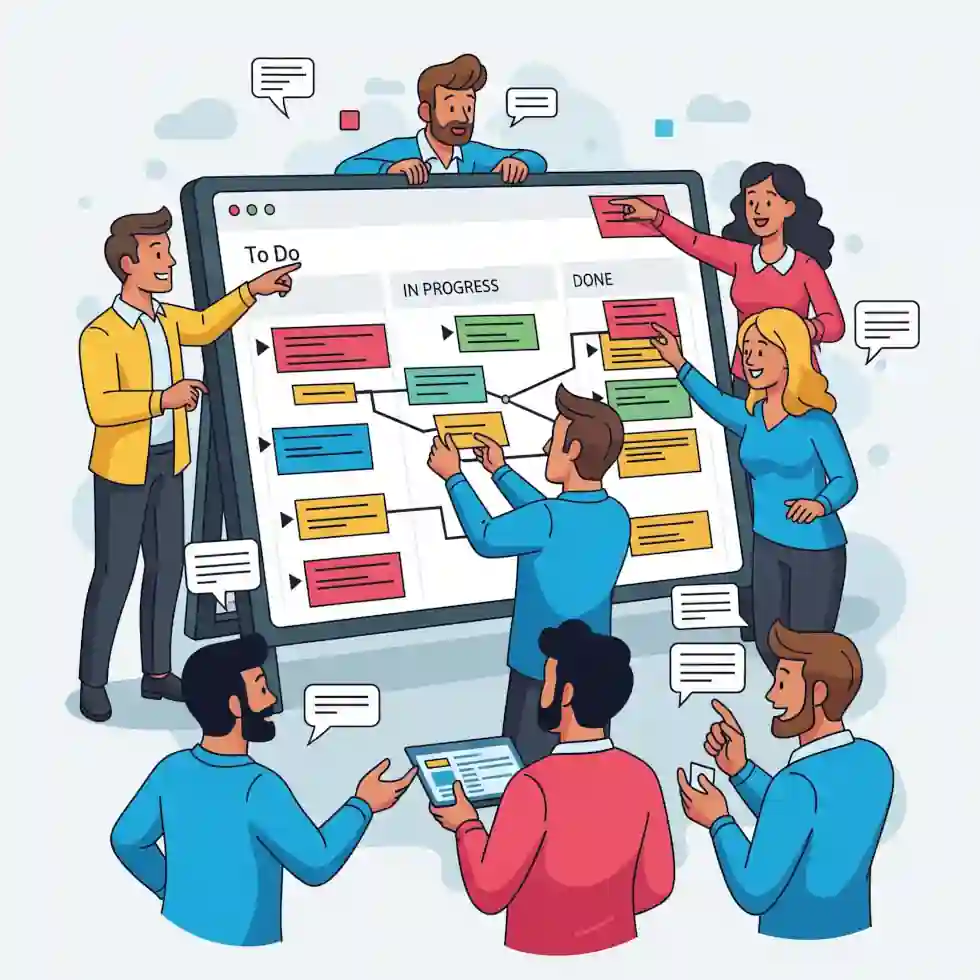
Kanban is a method focused on visualizing the work process and making it flow as smoothly as possible. Its basis is the Kanban board, typically divided into columns such as "To Do", "In Progress" and "Done".
Key principles of Kanban:
- Visualizing work: Every task is represented by a card on the board, so everyone on the team immediately sees what is being worked on and in what state it is.
- Limiting work in progress (WIP limits): One of the most important principles. Each column has a defined maximum number of tasks it can hold at once. This prevents the team from being overloaded and reveals bottlenecks in the process.
- Focus on flow: The goal is for tasks to pass through the board as smoothly and quickly as possible. Instead of fixed sprints, work is pulled through the system according to current capacity.
Why is agile management so popular?
- Flexibility: It makes it possible to react quickly to changes in the market or in customer requirements.
- Faster delivery of value: The customer gets working parts of the product much earlier and doesn't wait for a "big bang" at the end.
- Higher customer satisfaction: Thanks to continuous collaboration, the result is a product the customer really wants.
- Transparency: Everyone knows what is going on, and progress is visible to the whole team and management.
- Team motivation and responsibility: Self-organizing teams have more autonomy and feel more responsible for the result.
Conclusion: agility as a journey, not a destination
Switching to agile management is not just about introducing new processes. It is a deep cultural change that requires openness, trust and a willingness to keep learning and improving. It is not a cure-all, but for most modern software projects, it is the most effective way to deliver the right product in the right way in a complex world. You might also find my guide on how to manage a project step by step useful.